
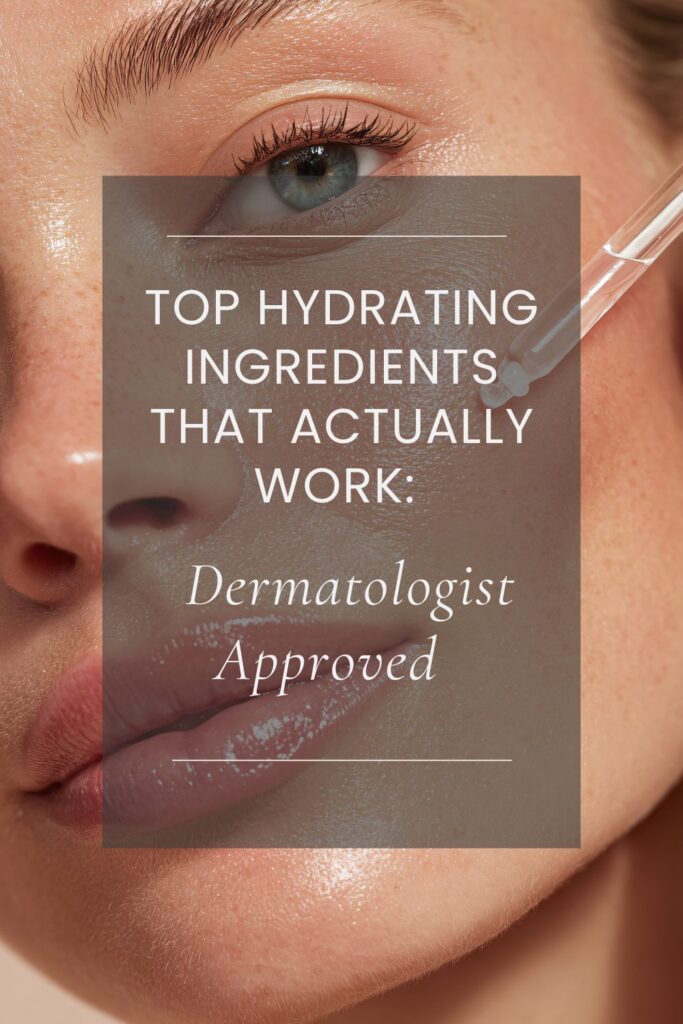
Why Hydration Is Essential for Healthy Skin
Hydrated skin is healthy skin. When the skin lacks proper hydration, the barrier becomes compromised, leading to dryness, irritation, dullness, and an increase in the appearance of fine lines. Without a strong barrier, skin struggles to retain moisture—no matter how many products are applied.
Dermatologists emphasize that effective hydration isn’t about using more products, but about choosing ingredients that support both water content and barrier integrity.
Hydration vs. Moisture: What’s the Difference?
Understanding this distinction is key to achieving long-term skin health:
- Hydration refers to increasing water content within the skin
- Moisture refers to sealing that hydration in to prevent water loss
The most effective skincare routines combine humectants, barrier-repairing lipids, and occlusives.
The Top Hydrating Ingredients That Actually Work
(Dermatologist Approved)
1. Hyaluronic Acid (Multiple Molecular Weights)
Hyaluronic acid is a cornerstone ingredient in dermatology due to its exceptional ability to bind water within the skin. When formulated with multiple molecular weights, it hydrates both the surface and deeper layers for improved plumpness and smoothness.
Best for:
- Dehydrated skin
- Fine lines caused by moisture loss
Dermatologist tip: Apply to slightly damp skin and follow with a moisturizer to lock hydration in.
2. Glycerin (A Clinically Proven Hydrator)
Glycerin is one of the most effective and well-researched humectants available. It attracts water into the skin and improves the barrier’s ability to retain moisture over time.
Why dermatologists trust it:
- Works in a variety of environments
- Strengthens barrier function
- Safe for sensitive and compromised skin
Ideal for: sensitive, compromised, or chronically dry skin
3. Ceramides (Essential for Barrier Health)
Ceramides are naturally occurring lipids that make up a significant portion of the skin barrier. When ceramide levels decline, moisture loss increases and skin becomes more reactive.
Benefits include:
- Improved barrier strength
- Reduced transepidermal water loss (TEWL)
- Smoother, more resilient skin
Ceramides are especially important for anyone using active ingredients such as retinoids or exfoliating acids.
4. Squalane (Lightweight, Skin-Identical Moisture)
Squalane mimics the skin’s natural oils, making it highly compatible and non-comedogenic. It delivers moisture without heaviness while supporting barrier function.
Ideal for:
- Dull or rough texture
- Those who dislike thick creams
Why dermatologists recommend it: It softens texture, boosts glow, and prevents moisture loss without clogging pores.
5. Niacinamide (Vitamin B3)
Niacinamide is a multitasking ingredient that supports hydration while strengthening the skin barrier. It also helps calm redness and improve uneven tone.
Dermatologist-approved benefits:
- Stimulates ceramide production
- Improves texture and radiance
- Supports sensitive and reactive skin
Ideal concentration: 2–5% for hydration and barrier support.
6. Cholesterol + Fatty Acids (Advanced Barrier Repair)
Cholesterol and fatty acids work synergistically with ceramides to rebuild the skin barrier at a structural level. This combination is a hallmark of dermatologist-recommended barrier-repair creams.
Why this matters:
- Restores barrier integrity
- Improves skin tolerance to active treatments
- Helps prevent chronic dryness and irritation
Look for moisturizers labeled “barrier repair” or “skin-identical lipids.”
7. Occlusives: Petrolatum, Shea Butter & Dimethicone
Occlusives don’t add hydration themselves, but they are essential for preventing moisture loss once hydration is restored.
Best used:
- As the final step in a routine
- At night or for compromised skin barriers
“Your glow is a reflection of the love you pour into yourself.”
Ingredients to Use with Caution
Overuse of certain ingredients can undermine hydration:
- Excessive exfoliating acids
- High-strength retinoids without barrier support
- Alcohol-heavy toners
Balancing active treatments with hydration and barrier repair is essential for long-term skin health.
How Dermatologists Recommend Layering Hydrating Ingredients
For optimal results:
- Gentle cleanser
- Hydrating serum (hyaluronic acid, glycerin)
- Treatment serum (niacinamide or retinoid, if tolerated)
- Barrier-repair cream (ceramides, cholesterol, fatty acids)
- Occlusive layer if needed
Final Takeaway
The top hydrating ingredients that actually work are not trend driven, they are clinically proven and dermatologist approved. By prioritizing hydration, barrier repair, and moisture retention, skin becomes healthier, smoother, and more radiant over time.
When the skin barrier is strong, hydration lasts longer and your skin naturally looks more balanced, resilient, and glowing.



Leave a Reply