

Five years ago, I made a video about how to get lean legs without getting bulky, and it became one of my most popular fitness videos.
And honestly? I understand why, because this is something women still ask me about ALL the time.
How do I get lean, toned legs without making my thighs look bigger?
Should I lift weights?
How much cardio should I do?
Will squats make my legs bulky?
So, girlfriend, it was officially time for an update.
A lot has changed since I made that original video, including training, body composition, recovery, etc.
I also want to correct a few things I said back then because fitness advice evolves, and I never want to keep repeating something simply because I said it five years ago.
So today, I’m sharing what I actually believe works now, what I’d do differently, and how I personally train for lean, defined legs without making bigger legs the goal.
And yes, we’re still going to talk about the fun stuff too, smooth skin, self-tanner, confidence and all the little things that make those legs POP.
Let’s get into it.
First: What Actually Makes Your Legs Look Lean and Toned?
Before we even talk about workouts, we need to clear something up.
There is no single exercise that magically gives you “skinny legs,” just like you can’t choose exactly where your body loses fat first.
The appearance of your legs is influenced by several things, including:
- Your overall body-fat level
- Genetics
- Where your body naturally stores fat
- The amount of muscle you carry
- How and how much you train your legs
- Your nutrition
- Daily activity
- Temporary water retention and inflammation
I grew up as a dancer, and I’ve always naturally had fairly lean, defined legs. Genetics absolutely play a role.
But genetics aren’t the whole story.
The way I train has always been strategic toward the look I personally want: strong, feminine, athletic and defined without intentionally trying to maximize the size of my legs.
And that’s an important distinction. “Toned” Doesn’t Mean Avoiding Muscle
You need muscle to create definition.
If you want that firm, sculpted appearance, strength training can absolutely be your friend. The goal isn’t to be afraid of weights. It’s to train according to your goal.
I’m personally not training my legs with the primary goal of maximizing hypertrophy, or making every muscle in my thighs as large as possible.
I’m training to maintain and build muscle, stay strong, create shape and keep my overall physique lean.
Big difference.
1. Cardio Helps, But You Don’t Need to Live on a Treadmill
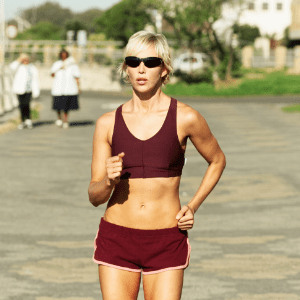
Yes girl, cardio. Everybody’s favorite word, lol.
But first let me remind you that everyone’s body type is different, therefore we can react to cardio training sometimes a bit differently from one another.
In my original video, I recommended different amounts of cardio based on whether someone was an ectomorph, mesomorph or endomorph.
Now, although this can be a helpful place to start, your ideal amount of cardio depends on things like your goals, current activity level, nutrition, training, fitness level, preferences and lifestyle.
For me, the bigger goal is simply: MOVE YOUR BODY.
What works for one body type, might not necessarily work for another type.
They’re 3 basic Body Types (which one best describes you?)
- Ectomorph – Tends to be thin, have lean build, and struggles to gain weight, and main goal is more often to put on some muscular weight.
- Mesomorph – Relatively average, thin joints with wide clavicle, athletic build. Can lose fat or gain muscle with ease.
- Endomorph – Tends to gain weight, and keep it on. Wider build, thick rib cage, and wide hips. Although they may have more muscle then either ectomorph or mesomorphs, its hard for them to lean out.
This can be a helpful guide to start, but not an end all be all.
“Consistency is more important than perfection.”
Moreover, walking is incredibly underrated. Walking offers many benefits, and it puts less stress on the joints, and body. Along with improving circulation, mobility, and enhances mood.
All of which reduce stress, thus keeping your cortisol level low which will help make weight loss much easier to achieve.
You can also incorporate:
- Incline walking
- Jogging or running
- Cycling
- Dance
- Pilates
- Swimming
- Hiking
- Stair climbing
- Whatever form of cardio you actually enjoy enough to keep doing
Remember, I grew up dancing, so movement has always been a big part of my life.
And I still believe that consistent daily movement combined with strategic strength training is one of the best combinations for creating an athletic, lean-looking physique.
You do not need to punish yourself with endless cardio.
Find movement you enjoy and can actually stick with. Consistency wins.
2. How I Strength Train for Lean, Defined Legs
When wanting to accomplish a slimmer, thinner leg appearance without getting too much of a muscular bulky look, you want to ensure you are training properly.
Firstly, it’s important to know that you can not spot reduce fat. Meaning there is no magical way to instantly slim your legs. In other words, just working out your lower body is not going to allow you to attain slimmer legs.
Therefore, it is imperative to focus on either doing full body workouts, splitting upper & lower, or hitting different body parts throughout the week. This will allow a balanced physique, and a balanced training regimen.
There are different phases of training, and I believe each phase can be necessary for overall physical fitness needs. But, since our goal here is to accomplish slimmer legs, let’s just keep it simple, and focus on the endurance/strength phase a bit.
Part of this phase in training is to challenge, and mix in both high intensity, and strength training. Allowing your body to create a lean, yet strong physique.
High repetitions aren’t some magical protection against building muscle, and lifting heavier weights doesn’t automatically make your legs bulky.
Your results depend on the bigger picture: your training volume, exercise selection, intensity, nutrition, recovery, genetics and how consistently you’re training for muscle growth.
So rather than fearing weight training, I think about where I want to build muscle and how much training volume I’m giving different areas of my lower body.
My goal: shape, not maximum size.
I want strong glutes, defined hamstrings, athletic-looking legs and I want muscle. I just don’t personally train with the goal of maximizing the size of my quads and thighs.
That means my lower-body workouts can include exercises such as:
- Romanian deadlifts
- Hip thrusts and glute bridges
- Step-ups
- Reverse lunges
- Split squats
- Cable kickbacks
- Hamstring curls
- Glute-focused movements
- Calf work
- Bodyweight and Pilates-style exercises
Other Fun Workouts to try to get slim, and lean legs would be:
- HIIT Workouts
- Yoga
- Ballet/Barre
- Dance
Exercise selection isn’t magic, though. Even glute-focused exercises can involve other leg muscles, and almost any resistance exercise can contribute to muscle growth if you progressively train it hard enough.
The key is creating a program that matches your physique goals.
And ladies, please don’t be scared of muscle.
Muscle is what helps give us that beautiful shape and definition we’re after.
How To get Slimmer Legs Without Getting Bulky
3. If You Want Leaner Legs, Nutrition Matters Too

There is no amount of cardio, or workouts that will beat bad nutritional habits. Period.
I share this with you because, I want you to succeed, and in order to do so you must know the power that eating healthy has on optimizing your body to feel, and look your best.
Remember, food can still be enjoyable. There are so many healthy alternatives on the market for you to choose from nowadays that will still allow you to eat clean without feeling deprived.
In order to achieve a leaner appearance in your legs, and have a healthier body in general.. It’s essential to begin adding in healthier foods to your life 70-80% of the time.
You can have the most perfectly planned leg workout in the world, but if your goal involves reducing body fat, your nutrition matters.
Unfortunately, we can’t tell our bodies:
“Okay, today we’re only taking fat from my inner thighs.”
Wouldn’t THAT be convenient?
Your genetics and biology influence where you tend to store fat and where you lose it first.
If fat loss is appropriate for your goal, the focus should be on improving overall body composition, not trying to burn fat from one specific body part.
My nutrition priorities include:
Protein:
Protein helps support muscle maintenance, repair and recovery—especially when you’re trying to lose body fat while maintaining that strong, defined look.
And if we’re putting in the work at the gym, we want to make sure we’re giving those muscles what they need to recover!
Add to Your Grocery List:
- Chicken or turkey
- Lean ground beef
- Salmon, tuna or shrimp
- Eggs + egg whites
- Greek yogurt
- Cottage cheese
- Tofu or tempeh
- Protein powder
Healthy Carbohydrates:
Carbs are NOT the enemy.
Quality carbohydrates provide your body with energy to fuel your workouts and help replenish muscle glycogen afterward. If you’re training regularly, carbs can help you actually have the energy to perform instead of dragging yourself through your workout.
I like choosing carbs that also bring some nutritional value to the table.
Add to Your Grocery List:
- Oatmeal
- Potatoes
- Sweet potatoes
- Rice
- Quinoa
- Whole-grain bread or wraps
- Bananas
- Berries
- Apples
- Beans and lentils
Healthy Fats:
Healthy fats are another important part of a balanced diet. They provide essential fatty acids, help your body absorb fat-soluble vitamins and can make meals more satisfying.
And yes—we want our healthy food to actually taste GOOD.
One thing to remember if fat loss is your goal: fats are more calorie-dense than protein and carbohydrates, so portions still matter. You don’t need to avoid them; just be mindful of how much you’re using.
Add to Your Grocery List:
- Avocados
- Extra-virgin olive oil
- Almonds or walnuts
- Natural peanut or almond butter
- Chia seeds
- Flaxseeds
- Pumpkin seeds
- Salmon or sardines
Fiber:
Fiber is one of those things I think we seriously underestimate.
Fiber-rich foods can support digestion, help with fullness and contribute to overall health. Bonus: many healthy carbohydrates—especially fruits, vegetables, whole grains and legumes—naturally contain fiber.
Add to Your Grocery List:
- Raspberries or blackberries
- Apples
- Broccoli
- Brussels sprouts
- Avocados
- Leafy greens
- Beans
- Lentils
- Chia seeds
- Oats
Mostly Nutrient-Dense Foods:
I want my meals to actually do something for me.
I want food that fuels my workouts, supports recovery, provides vitamins and minerals, keeps my energy up and helps me feel GOOD.
That doesn’t mean every single thing you eat has to be “perfect.” It’s the overall pattern that matters.
Add to Your Grocery List:
- Spinach or mixed greens
- Broccoli
- Bell peppers
- Tomatoes
- Berries
- Citrus fruits
- Eggs
- Greek yogurt
- Salmon
- Lean proteins
- Frozen fruits and vegetables
And don’t sleep on frozen produce! It’s convenient, lasts longer and makes throwing together a healthy meal or smoothie SO much easier.
Hydration:
Don’t underestimate this one.
Staying hydrated supports normal body function, exercise performance and recovery. And personally, I just feel SO much better when I’m properly hydrated.
Water should do most of the heavy lifting here, but you can also get fluids from foods and other beverages.
Add to Your Grocery List:
- Water or sparkling water
- Unsweetened electrolyte packets
- Coconut water
- Herbal tea
- Cucumbers
- Watermelon
- Oranges
Overall Calories Still Matter:
If fat loss is your goal, your overall energy intake still matters.
Fat loss requires an energy deficit over time—but that does not mean starving yourself, cutting out entire food groups or surviving on chicken and lettuce.
The goal isn’t: Eat as little as possible + do as much cardio as possible.
No thank you!
The goal is creating an approach you can maintain while still fueling your body and protecting the muscle you’ve worked hard to build.
That’s a much more balanced way to support a lean, strong body while still giving yourself enough fuel to train, recover and actually enjoy your life.
Especially as I’ve gotten older, I’m much more interested in body composition, strength, energy and longevity than simply seeing the smallest possible number on the scale.
4. Don’t Forget About Recovery
More isn’t always better.
Your workouts provide the stimulus, but recovery is when your body actually has the opportunity to repair, adapt and come back stronger.
If you’re hammering your legs every single day because you’re desperate to make them leaner, you may actually notice that they temporarily feel heavy, sore, tight or even look a little fuller.
Hard training creates temporary inflammation, and your muscles store glycogen along with water. So don’t panic if your legs look a little “puffier” after a hard leg day or when you first start strength training.
That doesn’t mean you’ve suddenly built massive thighs overnight. Give your body time to recover.
Here’s What I Include in My Recovery Routine:
Foam Rolling
Yes, I STILL love my foam roller.
Foam rolling can temporarily reduce muscle soreness and stiffness, improve flexibility and range of motion, and simply help your body feel better after training.
For me, it’s about relieving that tight, stiff feeling and helping my body move better between workouts.
A good foam-rolling session after leg day can feel AMAZING.
Stretching + Mobility
There’s a difference between being strong and being strong and able to move well.
Stretching and mobility work can help maintain or improve flexibility and range of motion, which can make exercises feel better and help you move more comfortably in everyday life.
I especially like giving some attention to my:
- Hip flexors
- Hamstrings
- Quads
- Glutes
- Calves
- Ankles and hips
It doesn’t have to become another hour-long workout either.
Even 5–10 minutes of intentional mobility work can be an easy addition to your routine.
Walking + Active Recovery
Walking is probably one of my favorite forms of active recovery because you’re moving your body without turning everything into another intense workout.
An easy walk can increase circulation, reduce that stiff “I’ve been sitting all day” feeling, and add gentle movement while still allowing your muscles to recover from harder training.
Plus, walking contributes to your overall daily activity and energy expenditure—which makes it a win-win when your goal is maintaining a lean, active physique.
Not every movement session needs to leave you dripping in sweat.
Sometimes your body just needs you to move and groove.
Rest Days
YES, you are allowed to take a day off.
Rest days aren’t being lazy, and they aren’t going to ruin your progress.
Your muscles need time between challenging workouts to repair and adapt. Strategic rest can also help manage fatigue so you can come back to your next workout with better energy and performance.
If you’re constantly exhausted, sore and dragging yourself through your workouts, doing MORE isn’t necessarily the answer.
Sometimes the smart fitness decision is recovery.
A rest day can mean completely resting, or depending on how you feel, keeping things gentle with a walk, light stretching or mobility.
Listen to your body.
Sleep
And we cannot talk about recovery without talking about SLEEP.
Sleep supports muscle recovery, physical performance, energy, appetite regulation and overall health.
You can have the perfect workout and nutrition plan, but consistently short-changing your sleep isn’t doing your body, or your fitness goals..any favors.
Consider sleep part of your fitness routine, not something separate from it.
My Recovery Formula
You don’t have to earn recovery. Recovery is part of the program.
And especially now that I’m in my 30s, my goal isn’t to beat my body into submission in the name of being lean.
I want to train hard and recover well so I can stay strong, active, healthy and consistent for years to come.
Because ultimately, consistency beats running yourself into the ground every single time.
5. Let’s Talk About the Beauty Side of Lean-Looking Legs
Okay, my beauty girls.
You KNOW I wasn’t going to leave this part out.
There is a difference between changing your body composition and doing things that simply make your legs look smoother, more defined and glowy.
And I’m here for BOTH.
Exfoliate + Moisturize
I still love exfoliating my body.
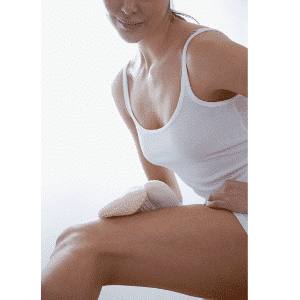
A good body exfoliant can remove dead surface skin cells and leave your legs looking smoother and brighter.
Follow it with a good body moisturizer and..HELLO GLOW.
It can make the surface of your skin look smoother, and help slightly reduce the appearance of cellulite which can be incredibly common and isn’t something you can simply scrub away. But, it is something we can help minimize the look and feel of ever so slightly.
We can take care of our skin without pretending normal skin has to be completely flawless.
6. My Secret Weapon: Self-Tanner
One of my favorite things to do is self tan, it literally can make you feel like a bronzed goddess!
Hands down one of the easiest, yet best ways to make you look instantly thinner is to self tan.
Moreover, fake tans can help hide any minor flaws, and enhance specific body parts to create the illusion of an even better body. I love what a little color does for my legs.
Self-tanner obviously doesn’t make your legs physically thinner or change your body fat.
But visually?
A tan can create more contrast, enhance the appearance of muscle definition and give your skin that gorgeous, glowy look.
My little routine is usually:
Exfoliate → moisturize → self-tan → GLOW.
And bonus: you’re getting the bronzed look without intentionally baking your skin in the sun.
Considering how much more focused I am on anti-aging and skincare in my 30s, protecting my skin from excessive UV exposure is MUCH higher on my priority list now.
We want the glow. We don’t need the unnecessary sun damage that comes with it.
Here are some of my favorite at home self tanners:




Leave a Reply